

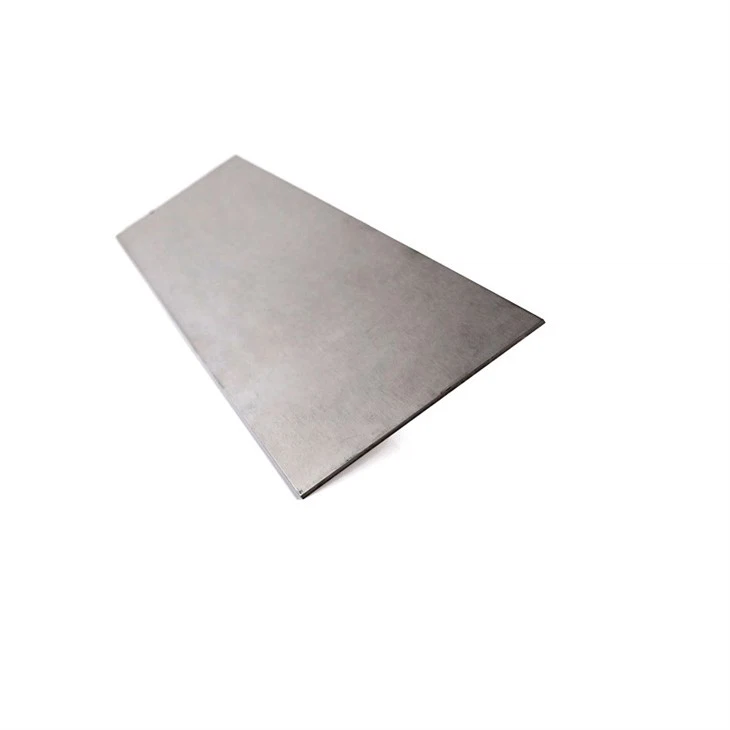
As a reputable supplier of Tantalum Sheet, I understand the critical importance of ensuring the corrosion resistance of our products. Tantalum is a highly valued metal known for its excellent corrosion resistance, making it a popular choice in various industries such as chemical processing, electronics, and aerospace. In this blog post, I will share some effective methods to test the corrosion resistance of tantalum sheets, which can help our customers better understand the quality of our products.
Understanding the Corrosion Mechanism of Tantalum
Before delving into the testing methods, it's essential to understand how tantalum resists corrosion. Tantalum forms a thin, stable oxide layer on its surface when exposed to air or certain corrosive environments. This oxide layer acts as a protective barrier, preventing further corrosion of the underlying metal. However, the effectiveness of this oxide layer can be influenced by factors such as the composition of the corrosive medium, temperature, and the presence of impurities in the tantalum sheet.
Visual Inspection
Visual inspection is the simplest and most basic method to assess the corrosion resistance of tantalum sheets. After exposing the tantalum sheet to a corrosive environment for a certain period, carefully examine the surface of the sheet. Look for signs of corrosion such as discoloration, pitting, or the formation of rust. A well - protected tantalum sheet should show minimal to no visible signs of corrosion.
It's important to note that visual inspection alone may not provide a comprehensive assessment of corrosion resistance. Some forms of corrosion, such as internal corrosion or stress - corrosion cracking, may not be visible to the naked eye. Therefore, visual inspection should be combined with other testing methods for a more accurate evaluation.
Immersion Testing
Immersion testing is a widely used method to evaluate the corrosion resistance of tantalum sheets. In this method, a sample of the tantalum sheet is immersed in a specific corrosive solution for a predetermined time at a controlled temperature. The corrosive solution can be chosen based on the intended application of the tantalum sheet. For example, if the tantalum sheet is to be used in a chemical processing plant, the solution may mimic the chemicals present in the process.
During the immersion period, regularly monitor the sample for any changes. After the immersion time is complete, remove the sample from the solution, rinse it thoroughly with distilled water, and dry it. Then, measure the weight loss of the sample. A lower weight loss indicates better corrosion resistance. The weight loss can be calculated using the following formula:
Weight loss (g) = Initial weight (g) - Final weight (g)
To obtain more accurate results, multiple samples should be tested, and the average weight loss should be calculated.
Electrochemical Testing
Electrochemical testing is a more sophisticated method that provides detailed information about the corrosion behavior of tantalum sheets. This method involves measuring the electrochemical properties of the tantalum sheet in a corrosive environment. One of the most common electrochemical testing techniques is potentiodynamic polarization.
In potentiodynamic polarization testing, a small electrical potential is applied to the tantalum sheet sample, and the resulting current is measured. By analyzing the relationship between the potential and the current, important corrosion parameters such as the corrosion rate, corrosion potential, and passivation behavior can be determined.
The corrosion rate can be calculated from the polarization data using the Stern - Geary equation. A lower corrosion rate indicates better corrosion resistance. Electrochemical testing can also help identify the onset of corrosion and the effectiveness of the protective oxide layer on the tantalum sheet.

Microstructural Analysis
Microstructural analysis can provide valuable insights into the corrosion resistance of tantalum sheets. After corrosion testing, use techniques such as scanning electron microscopy (SEM) and energy - dispersive X - ray spectroscopy (EDS) to examine the surface and cross - section of the tantalum sheet.
SEM can reveal the surface morphology of the tantalum sheet after corrosion, showing features such as pitting, cracking, or the formation of corrosion products. EDS can be used to analyze the elemental composition of the corrosion products, which can help understand the corrosion mechanism.
In addition, X - ray diffraction (XRD) can be used to determine the crystal structure of the tantalum sheet and any corrosion products. Changes in the crystal structure can indicate the occurrence of corrosion and the degradation of the tantalum sheet.
Factors Affecting Corrosion Resistance Testing Results
Several factors can affect the results of corrosion resistance testing. The purity of the tantalum sheet is a crucial factor. Higher purity tantalum sheets generally have better corrosion resistance because impurities can act as sites for corrosion initiation.
The surface finish of the tantalum sheet also matters. A smooth surface finish can promote the formation of a more uniform and protective oxide layer, while a rough surface may have more defects that can lead to corrosion.
The temperature and pressure of the corrosive environment can significantly influence the corrosion rate. Higher temperatures and pressures can accelerate the corrosion process, so it's important to control these parameters during testing to ensure accurate and reproducible results.
Conclusion
Testing the corrosion resistance of tantalum sheets is a multi - step process that requires a combination of different methods. Visual inspection, immersion testing, electrochemical testing, and microstructural analysis all play important roles in providing a comprehensive assessment of the corrosion resistance of our tantalum sheets.
As a Tantalum Sheet supplier, we are committed to providing high - quality products with excellent corrosion resistance. We conduct rigorous corrosion testing on all our products to ensure they meet the highest standards. If you are interested in our Tantalum Sheet, Tantalum Powder, or Tantalum Ingot, please feel free to contact us for more information and to discuss your specific requirements. We look forward to establishing long - term partnerships with you.
References
- Jones, D. A. (1996). Principles and Prevention of Corrosion. Prentice Hall.
- Uhlig, H. H., & Revie, R. W. (1985). Corrosion and Corrosion Control: An Introduction to Corrosion Science and Engineering. Wiley.
- Pourbaix, M. (1974). Atlas of Electrochemical Equilibria in Aqueous Solutions. Pergamon Press.