


Material Type:Bismuth
Symbol:Bi
Color/Appearance:Lustrous Reddish White, Metallic
Melting Point:2079 °C
Density:9.747 g/cc
Sputtering Target
Why Choose Us?
Rich Experience
KOBO is a professional Metal processing company with more than 20 years of experience. Dedicated to strict quality control and attentive customer service, our experienced staff is always available to discuss your requirements and ensure complete customer satisfaction.
Advanced Equipment
KOBO is well equipped with Hi-tech equipments. We are fully equipped to supply a full range of refractory and reactive metals (titanium, niobium, tantalum, vanadium, molybdenum, tungsten, hafnium, zirconium,nickel etc) and their alloys, with unparalleled product support and customer service.
Competitive Pricing
Years of industry insight and global supply chain knowledge, ensure you receive premium quality materials, at competitive market rates. We offer competitive pricing without compromising on quality, making our products accessible to a wide range of customers.
Sustainability
We are committed to environmental sustainability and strive to minimize our environmental impact by using eco-friendly production methods.
-
![Bismuth Sputtering Targets (Bi)]()
-
![Hafnium Sputtering Targets (Hf)]() Hafnium Sputtering Targets (Hf)Material Type:Hafniumread more
Hafnium Sputtering Targets (Hf)Material Type:Hafniumread more
Symbol:Hf
Color/Appearance:Gray Steel, Metallic
Melting Point:2227 °C
Density:13.31 g/cc -
![Molybdenum Sputtering Target (Mo)]() Molybdenum Sputtering Target (Mo)Material Type:Molybdenumread more
Molybdenum Sputtering Target (Mo)Material Type:Molybdenumread more
Symbol:Mo
Color/Appearance:Grey, Metallic
Melting Point:2,617 °C
Density:10.2g/cc -
![Nickel Sputtering Targets (Ni)]() Nickel Sputtering Targets (Ni)Material Type:Nickelread more
Nickel Sputtering Targets (Ni)Material Type:Nickelread more
Symbol:Ni
Color/Appearance:Lustrous silvery metal
Melting Point:1455 °C
Density:8.902 g/cc -
![Niobium Sputtering Targets (Nb)]() Niobium Sputtering Targets (Nb)Material Type:Niobiumread more
Niobium Sputtering Targets (Nb)Material Type:Niobiumread more
Symbol:Nb
Color/Appearance:Gray, Metallic
Melting Point:2,468 °C
Density:8.57 g/cc -
![Tantalum Sputtering Targets (Ta)]() Tantalum Sputtering Targets (Ta)Material Type:Tantalumread more
Tantalum Sputtering Targets (Ta)Material Type:Tantalumread more
Symbol:Ta
Color/Appearance:Gray Blue, Metallic
Melting Point:3,017°C
Density:16.6 g/cc -
![Titanium Sputtering Targets (Ti)]() Titanium Sputtering Targets (Ti)Material Type:Titaniumread more
Titanium Sputtering Targets (Ti)Material Type:Titaniumread more
Symbol:Ti
Color/Appearance:Silvery Metallic
Melting Point:1,660°C
Density:4.5g/cc -
![Vanadium Sputtering Targets (V)]() Vanadium Sputtering Targets (V)Material Type:Vanadium Symbol:V Color/Appearance:Silvery Gray Metallic Melting Point:1890 °C Density:5.96 g/ccread more
Vanadium Sputtering Targets (V)Material Type:Vanadium Symbol:V Color/Appearance:Silvery Gray Metallic Melting Point:1890 °C Density:5.96 g/ccread more -
![Zinc Sputtering Targets (Zn)]() Zinc Sputtering Targets (Zn)Material Type:Zincread more
Zinc Sputtering Targets (Zn)Material Type:Zincread more
Symbol:Zn
Color/Appearance:Bluish Pale Gray, Metallic
Melting Point:420 °C
Density:7.14 g/cc -
![Zirconium Sputtering Targets (Zr)]() Zirconium Sputtering Targets (Zr)Material Type:Zirconiumread more
Zirconium Sputtering Targets (Zr)Material Type:Zirconiumread more
Symbol:Zr
Color/Appearance:Silvery White, Metallic
Melting Point:1852 °C
Density:6.49 g/cc


Definition of Sputtering Target
Sputtering targets are materials used to produce thin films in a technique known as sputter deposition, or thin film deposition. In this process, the sputtering targets start off as a solid and is then split up by gaseous ions into small particles that form a spray and coat a material, which is called the substrate.
Benefits of Sputtering Target
Sputtering is a fundamental process in materials science and manufacturing that involves the deposition of thin films onto surfaces. Sputtering target works by bombarding a target material with high-energy ions, typically using an inert gas like argon in a vacuum chamber. When the ions collide with the target, they dislodge atoms or molecules from the surface, which then condense on a substrate to form a thin film. Sputtering target offers several advantages, including precise control over film thickness, high material purity, and the ability to deposit a wide range of materials. Sputtering target is widely used in industries such as microelectronics, optics, and coating technology to create thin films with specific properties for various applications.
High purity deposition
It allows for the deposition of high-purity thin films since it does not involve chemical reactions. This makes it suitable for applications where material purity is critical, such as in microelectronics.
Controlled film thickness
It provides precise control over the thickness of the deposited film, enabling the production of thin films with specific thickness requirements.
Uniform coating
Sputtering typically results in uniform film deposition across the entire substrate surface, ensuring consistency in film properties.
Wide material compatibility
Sputtering can be used with a wide range of materials, including metals, semiconductors, ceramics, and even some polymers, making it versatile for various applications.
Excellent adhesion
Sputtered films often exhibit strong adhesion to the substrate, reducing the risk of delamination or peeling.
High-density films
The high packing densities of high-density films can lead to improved mechanical and electrical properties.
Types of Sputtering Targets
Sputtering targets are made of different materials to create thin films. There are four main types of sputtering targets:
Metal targets
These are widely used because they conduct heat and electricity well. They're made from gold, silver, copper, aluminum, and titanium.
Ceramic targets
These are hard, wear-resistant, and chemically stable. Typical ceramics used include silicon dioxide, aluminum oxide, and titanium dioxide.
Alloy targets
These are made by combining two or more metals to create specific properties. For example, an alloy of nickel and chromium could be used to make Nickel Chromium Targets.
Composite targets
These are made by combining two or more materials of different types to create specific properties. For example, a copper and aluminum oxide composite target.
What Are Sputtering Targets Made Of?
Sputtering targets are made of various materials depending on their purpose. These can be metals, ceramics, alloys, or composites.
Metal targets are commonly used because they conduct heat and electricity well and can create many different alloys. Examples of metals used for sputtering include gold, silver, copper, aluminum, and titanium.
Ceramic targets are known for their strength, resistance to wear, and resistance to chemicals. Examples of ceramics used for sputtering include aluminum oxide, silicon dioxide, and titanium dioxide.
Alloy targets are made by mixing two or more metals to create specific physical or chemical properties. For instance, a mixture of gold and silver can create a thin film that is conductive, but not as much as pure gold or pure silver.
Composite targets are produced by mixing different materials, such as metal and ceramic, to create a specific combination of properties. For example, a composite target made of copper and aluminum oxide can produce a thin film that is highly conductive and adheres well to a surface.

What Size Is a Sputtering Target?
The first basic requirement for the deposition of metallic glass thin films by sputtering is the sputtering target. The sputtering target is usually a circular disc (or it can be rectangular depending on the equipment) of diameter between one and several inches.
As we have noticed metallic glass alloys are made up of three or more different kinds of elements in a specific composition range, therefore the sputtering target material must have a similar composition, and is not usually available commercially. Therefore sputtering targets for deposition of metallic glass thin films need to be custom made.
The multielemental alloy sputtering targets can be easily made by arc-melting or radio-frequency melting of a mixture of metals in a vacuum or inert-gas atmosphere. Another way to fabricate the sputtering target is to mix the powders of different metals and sinter the mixture at an elevated temperature under high pressure in a die of required dimensions. This technique of making the target or solid discs from powders is known as spark plasma sintering (SPS).
Quality Control and Testing Methods for Sputtering Targets
Making sputtering targets of good quality is very important in manufacturing. When making these targets, need to check that the material is pure and doesn't have any dirt or other stuff in it. We also need to make sure that the target has the right size and shape, and that it has a smooth surface. Lastly, need to make sure that it is not broken or dirty when it gets to the factory.
Testing the material
Test the material to make sure it is pure and doesn't have any dirt or other stuff in it. Testing instruments like x-ray machines, inductively coupled plasma (icp) analysis, and glow discharge mass spectrometry (gdms).
Checking the dimensions
Check the size and shape of the target to make sure it meets the requirements. We use machines like optical profilometry, coordinate measuring machines (cmm), and laser scanning.
Verifying the surface finish
Check the surface of the target to make sure it has the required surface finish and roughness. We use machines like scanning electron microscopy (sem), atomic force microscopy (afm), and optical microscopy.
Checking for damage and dirt
Check for any damage or dirt on the target to make sure it is not broken or dirty during transportation and storage. Techniques used for this include visual inspection, leak testing, and vacuum packaging.
How Do Sputtering Targets Work?
Sputtering is classified under the physical vapor deposition technique. In this process, high-energy particles are made to bombard the target or source material to eject the atoms from the target material. The ejected atoms are made to fall onto a substrate getting deposited as a thin film layer.
The sputtering system consists of a high-vacuum chamber, a gas inlet, a pump connection, a sputter target, and the required gases. The target from which the atoms are to be ejected is negatively charged and the substrate on which the thin film has to be deposited is positively charged. Plasma is generated by applying direct current (DC), alternating current (AC), or radiofrequency (RF) and by exciting the gases such as argon in a vacuum chamber. The ions in the plasma are accelerated to a sufficiently high kinetic energy and made to bombard the target. The kinetic energy imparted to the bombarding particles by plasma energy is much higher than conventional thermal energies. This results in the removal of material from the sputtering target. The substrate is maintained at a negative charge and the source atoms are accelerated toward the substrate, resulting in thin-film deposition. For electrically conductive materials, dc discharge is preferred while an rf plasma is suitable for all materials, including dielectric target materials.
To increase the sputter yield, often a so-called magnetron sputtering process is used that uses magnetic fields to confine the plasma to the sputter yield.
How to Choose Sputtering Target?
Materia
Pick the material with the properties you need for the thin film you want to create, and that can be used with your deposition method.
Purity
Keep the material as pure as possible, since impurities can mess up the properties of the thin film you're making.
Size and shape
Choose the size and shape of the target based on what you're coating and the deposition system you're using.
Deposition method
Choose the method that will give you the properties you want for your thin film, and that works with the material and what you're coating.
What Is the Voltage of a Sputtering Target?
|
Sputtering Target |
Sputtering Voltage |
|
Indium Tin Oxide (ITO) |
≈200V |
|
Copper (Cu) Aluminum (Al) Titanium (Ti) |
400~600V |
|
Manganese (Mn) Chromium (Cr) |
>700V |
Driving Forces of the Sputtering Target and Evaporation Material Market
Technological advancements
Continuous innovations in technology enhance the efficiency and effectiveness of sputtering target and evaporation material products and services, including advancements in materials, manufacturing processes, and digital technologies.
Growing demand
Increasing demand for sputtering target and evaporation material products and services, fueled by factors such as population growth, urbanization, and changing consumer preferences, is a significant driver for market expansion.
Regulatory support
Favorable government policies, regulations, and incentives promoting the use of sputtering target and evaporation material, such as subsidies for renewable energy projects and carbon pricing mechanisms, stimulate market growth.
Environmental awareness
Rising awareness about environmental sustainability and the need to reduce carbon emissions drives the adoption of eco-friendly and renewable sputtering target and evaporation material solutions.
Cost reduction
Ongoing cost reductions in sputtering target and evaporation material production and installation, driven by economies of scale, technological advancements, and increased competition, make these solutions more affordable and accessible.
Why Sputtering Targets Are an Excellent Source of Precious Metal Scrap?
Sputter deposition is often involved in the production of semiconductors and computer chips. As such, most sputtering target materials are metallic alloys or elements, although some ceramic targets are available that create hardened thin coatings for some tools.
Once a sputtering target has been used, most will assume it is now useless. However, there is usually some valuable metal material left that should be recycled. In many cases, the metal could even turn out to be an incredibly rare precious metal like rhodium that can often be recycled as well.
Here's a list of all the sputtering targets that are worth recycling:
Aluminum targets
Aluminum sputtering is often used for semiconductor applications. Though it is not the most valuable metal, it is still in demand due to its versatility. You can find recycled aluminum in almost any modern vehicle or airplane, and it is used in many household items. Aluminum is also great for heat resistance, which makes it the perfect metal for containers.
Copper targets
Copper is often used for electrodes and other applications where electrical conductivity is crucial. It's not rare, but it is used in many applications like plumbing, wiring and windshield films.
Tin targets
Tin can be applied to many materials to improve their properties. It is used in sputtering to improve corrosion resistance.
Zinc targets
Zinc targets are also used for their corrosion resistance. When it is sputtered onto another metal, it can be a corrosion barrier, which is why it's typically used to produce cathodes. Zinc can also be found in batteries, propellants and paints.
Platinum, silver, and gold
Precious metals like gold, silver and platinum are sometimes used in sputtering applications. They provide a combination of chemical inertness and electrical conductivity, which makes them excellent for instrument and electrode production. They are also worth recycling for their financial value alone.
Our Factory
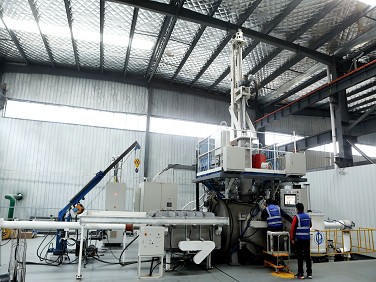
KOBO is well equipped with Hi-tech equipments, among them one is VAR(Vacuum Arc Remelt) melting furnace, a standard in industry, can allow multiple melting, it is economical to produce titanium which is for Industrial, Medical, Racing and Aerospace applications.
Another is EB( Electron Beam) melting furnace,Electron beam melting is distinguished by its superior refining capacity. Thus it is ideal for remelting and refining of metals and alloys under high vacuum in water cooled, ceramic free copper molds. It also plays an important role in manufacturing of high-pure sputtering target materials and alloys for the electronic industry.
We are fully equipped to supply a full range of refractory and reactive metals (titanium, niobium, tantalum, vanadium, molybdenum, tungsten, hafnium, zirconium,nickel etc) and their alloys. Our goal is to be a global metal resource solver.
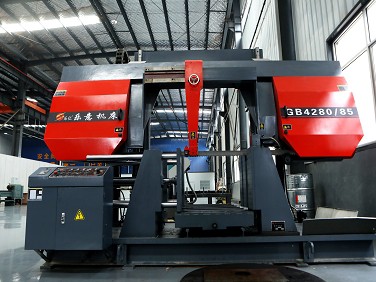
Advanced Equipment


Our Certificate


Ultimate FAQ Guide to Sputtering Target
As one of the leading sputtering target suppliers in China, we warmly welcome you to buy high-grade sputtering target in stock here from our factory. All our products are with high quality and low price. Contact us for quotation.
Zirconium Sputtering Target, ISO5832 3 Titanium Fittings, Good Tantalum machining parts