


Material:Pure Vanadium, Vanadium Alloys
Appearance:Silvery metal
Standard:ASTM A572
Sizes:Customized
Density:6.11 g/cm3
Vanadium
Why Choose Us?
Rich Experience
KOBO is a professional Metal processing company with more than 20 years of experience. Dedicated to strict quality control and attentive customer service, our experienced staff is always available to discuss your requirements and ensure complete customer satisfaction.
Advanced Equipment
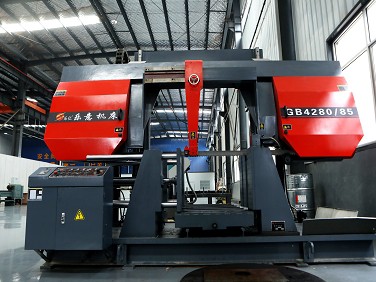
KOBO is well equipped with Hi-tech equipments. We are fully equipped to supply a full range of refractory and reactive metals (titanium, niobium, tantalum, vanadium, molybdenum, tungsten, hafnium, zirconium,nickel etc) and their alloys, with unparalleled product support and customer service.
Competitive Pricing
Years of industry insight and global supply chain knowledge, ensure you receive premium quality materials, at competitive market rates. We offer competitive pricing without compromising on quality, making our products accessible to a wide range of customers.
Sustainability
We are committed to environmental sustainability and strive to minimize our environmental impact by using eco-friendly production methods.
-
![Vanadium Bar and Wire]()
-
![Vanadium Tube]() Vanadium TubeMaterial:Pure Vanadium, Vanadium Alloysread more
Vanadium TubeMaterial:Pure Vanadium, Vanadium Alloysread more
Appearance:Silvery metal
Standard:ASTM A572
Sizes:Customized
Density:6.11 g/cm3 -
![Vanadium Sheet]() Vanadium SheetMaterial:Pure Vanadium, Vanadium Alloysread more
Vanadium SheetMaterial:Pure Vanadium, Vanadium Alloysread more
Appearance:Silvery metal
Standard:ASTM A572
Sizes:Customized
Density:6.11 g/cm3 -
![Vanadium Machining Parts]() Vanadium Machining PartsMaterial:Pure Vanadium, Vanadium Alloysread more
Vanadium Machining PartsMaterial:Pure Vanadium, Vanadium Alloysread more
Appearance:Silvery metal
Standard:ASTM A572
Sizes:Customized/According to drawing
Density:6.11 g/cm3


Definition of Vanadium
Vanadium is a grey, soft, and ductile high-value metal with several unique characteristics that position it strongly in the steel, alloys, and chemical sectors. The metal also acts as a battery material that is 100% reusable. More than 85% of vanadium is recovered from magnetite and titano-magnetite ores, either as the primary product or more commonly as a co-product with iron processed for steel production. It can also be recovered as a secondary product from fly ash, petroleum residues, alumina slag, and from the recycling of spent catalysts used in some crude oil refining.
Advantages Of Vanadium
Vanadium has properties in it that allow it to be added to automotive batteries to store more energy, have a faster recharge rate, and provide the motor with more power or torque. This additive only takes a small amount to increase the tensile strength of the steel and this steel is referred to as ferrovanadium. This metal is used is automotive, aviation, and aerospace.
Vanadium-titanium alloys have a high strength to weight ratio that is considered the best of any engineered material. In fact, a titanium-aluminum-vanadium alloy was used in the SR-71B aircraft engines. This allows them to reach 85,000 feet and high speeds over 2,200 mph. Vanadium has been used to strengthen the steel on hulls of battleships for so long because of its lighter weight.
Vanadium has also been used to create stronger rebar to attempt to reduce damage in concrete structures in earthquake areas. The titanium alloy that vanadium strengthens is used on under carriages and wings of air craft as well. It doesn't take a large amount of vanadium to strengthen steel. Around 0.01% and 0.10% vanadium increases the toughness and lowers the ductile to brittle temperature of steel.
Features of Vanadium
|
Property |
Minimum Value (S.I.) |
Maximum Value (Imp.) |
|
Compressive Strength |
125 |
76.87 |
|
Ductility |
0.01 |
0.6 |
|
Elastic Limit |
125 |
76.87 |
|
Endurance Limit |
85 |
43.5113 |

Applications of Vanadium in the Steel Industry
Iron and steel refer to steel and pig iron, both of which are alloys with iron and carbon as the main elements. Iron and steel are the most widely used metal materials in industry. When vanadium is added to steel, it has a strong affinity with carbon, nitrogen, and oxygen and can generate stable compounds with these elements. Vanadium mainly exists as its carbide in steel, where its main role is to refine the structure and grains of the steel, which reduces its sensitivity to overheating, and increases its strength and toughness.
During the heat treatment of steel, the compounds produced by vanadium, carbon, and nitrogen in the steel can strongly prevent the grains from growing, resulting in hot-processed steel with a fine structure at room temperature, high strength, and good plasticity and toughness. When austenite is dissolved at high temperature, the hardenability can be increased.
Conversely, in the presence of carbides, the hardenability is reduced. Vanadium increases the tempering stability of quenched steel and produces a secondary hardening effect. Vanadium can refine the grains, increase the strength and yield ratio and low-temperature toughness after normalizing, and improve the welding performance of ordinary low-alloy steel. Vanadium is often used together with manganese, chromium, molybdenum, tungsten, and other elements in structural steels as it reduces the hardenability under general heat-treatment conditions.
What Happens to Vanadium When It Enters the Environment?
1. Sources
Vanadium occurs naturally in soil, water, and air. Natural sources of atmospheric vanadium include continental dust, marine aerosol, and volcanic emissions.
Releases of vanadium to the environment are mainly associated with industrial sources, especially oil refineries and power plants using vanadium rich fuel oil and coal. Global human-made atmospheric releases of vanadium have been estimated to be greater than vanadium releases due to natural sources. Natural releases to water and soil are far greater overall than human-made releases to the atmosphere.
2. Break down
Vanadium cannot be destroyed in the environment. It can only change its form or become attached or separated from airborne particulate, soil, particulate in water, and sediment.
● Air
Vanadium particles in the air settle to the ground or are washed out of the air by rain. Smaller particles, such as those emitted from oil-fueled power plants, may stay in the air for longer times and are more likely to be transported farther away from the site of release.
● Water and soil
The transport and partitioning of vanadium in water and soil is influenced by many factors including acidity of the water or soil and the presence of particulates. Vanadium can either be dissolved in water as ions or may become adsorbed to particulate matter.
4 Uses Of Vanadium You Mightn't Know
Vanadium is a silver-gray metal with a high melting point and is often called refractory metal together with niobium, tantalum, tungsten, and molybdenum. Moreover, vanadium is malleable, hard, non-magnetic, and has the ability to resist hydrochloric acid and sulfuric acid. It has better gas, salt, and water corrosion resistance than most stainless steel. Because of its excellent physical and chemical properties, vanadium has been widely used in industry and our daily lives.
The uses of vanadium in the iron and steel industry
Vanadium is an important alloying element, mainly used in the steel industry. About 85% of metal vanadium is added in the form of iron vanadium and vanadium-nitrogen alloys in steel production to improve the strength, toughness, ductility, and heat resistance of steel.
Vanadium-containing steel has excellent characteristics such as high strength, high toughness, and good wear resistance, so it is widely used in industries such as machinery, automobiles, shipbuilding, railways, aviation, bridges, electronic technology, defense industry, etc.
Vanadium-containing high-strength alloy steels mainly include high-strength low-alloy (hsla) steel, hsla steel plate, hsla steel, hsla strip, advanced high-strength strip, construction threaded steel, high carbon steel wire, rails, tools and die steel.
The uses of vanadium in the aerospace industry
8-10% of metal vanadium is used in the form of titanium-aluminum-vanadium alloys for aircraft engines, aerospace cabin frameworks, missiles, steam turbine blades, rocket engine shells, etc. Vanadium can be used as a stabilizer and strengthening agent in titanium alloys, which makes titanium alloys have good ductility and plasticity.
In addition, vanadium alloys are also used in magnetic materials, cemented carbide, superconducting materials, and nuclear reactor materials.
The uses of vanadium in the chemical industry
In the chemical industry, vanadium is mainly used as a catalyst for the manufacture of sulfuric acid and vulcanized rubber. It is also used to suppress the production of nitrous oxide in power plants.
Other chemical vanadium products are mainly used for catalysts, ceramic colorants, developers, desiccants, etc.
The uses of vanadium in the field of vanadium redox battery
Vanadium redox battery is a new type of clean energy storage device, and its research began at the university of new south wales in australia in the 1980s. Compared with other chemical power sources, vanadium batteries have obvious advantages such as high power, large capacity, high efficiency, long life, fast response, instantaneous charging, high safety, and low cost.
What Are the Methods to Store Vanadium?
What are the different methods for storing Vanadium?
There are several methods for storing Vanadium, including as a solid, in solution, or in the form of a compound. Vanadium can also be stored in a gaseous state.
How is Vanadium stored in its solid form?
Vanadium can be stored as a solid by forming an alloy with another metal, such as iron or aluminum. This method is commonly used in the production of steel, where Vanadium is added to improve its strength and durability.
What is the most common method for storing Vanadium in solution?
The most common method for storing Vanadium in solution is by dissolving it in an acidic solution, such as sulfuric acid. This allows for easy transport and use in various industrial processes.
How is Vanadium stored as a compound?
Vanadium can be stored as a compound by combining it with other elements to form compounds such as vanadium oxide or vanadium pentoxide. These compounds have various uses in industries such as ceramics, pigments, and batteries.
What are the benefits of storing Vanadium in a gaseous state?
Storing Vanadium in a gaseous state allows for easier handling and transportation, as well as more precise control over the amount used in industrial processes. However, this method requires specialized equipment and is not as commonly used as other storage methods.
Vanadium Machining Process
Vanadium, a versatile transition metal known for its remarkable strength, high-temperature stability, and excellent corrosion resistance, holds immense potential in various industries. To fully harness the capabilities of this extraordinary material, manufacturers rely on a range of cutting-edge processing technologies.
01/
Heat treatment: Heat treatment plays a crucial role in vanadium manufacturing, enabling the optimization of its mechanical properties. Advanced heat treatment techniques provide precise control over heating and cooling cycles, enhancing vanadium's strength, hardness, and overall performance. This process refines the microstructure of vanadium, allowing its application in diverse industries.
02/
Cold working: Employs cold working techniques to shape and strengthen vanadium. Processes such as rolling, bending, and stamping ensure dimensional accuracy while improving its mechanical properties. Cold working enables manufacturers to create intricate designs and precise components, expanding the possibilities for vanadium-based products.
03/
Surface treatment: Surface treatment technologies enhance the performance and aesthetics of vanadium. Techniques such as electroplating or passivation can be utilized to provide protective coatings, further enhancing vanadium's corrosion resistance. Surface treatments like grinding, polishing, or coating can also be employed to achieve desired finishes, enhancing the visual appeal and functionality of vanadium-based products.
04/
Welding: Advanced welding techniques play a vital role in effectively joining vanadium components. Utilizing methods such as tig (tungsten inert gas) welding or electron beam welding, ensures precise and reliable bonding of vanadium materials. The welding process imparts strength and structural integrity to vanadium-based products, facilitating the creation of complex assemblies and ensuring their durability.
05/
Casting: Casting is a versatile technique employed to shape vanadium into intricate designs and structures. By utilizing investment casting or other casting methods, enables the production of customized shapes and sizes. Casting technology empowers the creation of unique vanadium components, offering exceptional design flexibility and customization options.
06/
Grinding: Utilizes grinding technology to refine the surface of vanadium, ensuring smoothness, precision, and improved dimensional accuracy. This process involves the use of abrasive particles to remove excess material and achieve the desired surface finish. Grinding enhances the surface quality of vanadium, making it suitable for various high-performance applications.
Our Factory
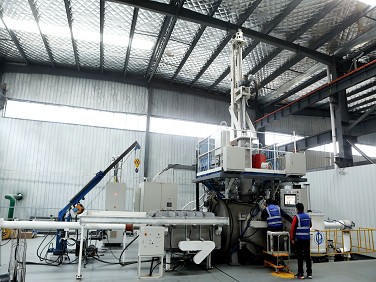
KOBO is well equipped with Hi-tech equipments, among them one is VAR(Vacuum Arc Remelt) melting furnace, a standard in industry, can allow multiple melting, it is economical to produce titanium which is for Industrial, Medical, Racing and Aerospace applications.
Another is EB( Electron Beam) melting furnace,Electron beam melting is distinguished by its superior refining capacity. Thus it is ideal for remelting and refining of metals and alloys under high vacuum in water cooled, ceramic free copper molds. It also plays an important role in manufacturing of high-pure sputtering target materials and alloys for the electronic industry.
We are fully equipped to supply a full range of refractory and reactive metals (titanium, niobium, tantalum, vanadium, molybdenum, tungsten, hafnium, zirconium,nickel etc) and their alloys. Our goal is to be a global metal resource solver.
Advanced Equipment


Our Certificate


Ultimate FAQ Guide to Vanadium
As one of the leading vanadium suppliers in China, we warmly welcome you to buy high-grade vanadium in stock here from our factory. All our products are with high quality and low price. Contact us for quotation.
Vanadium Sheet, Vanadium Bar and Wire, Titanium