


Material:Pure Nickel, Nickel Alloys
Appearance:Silvery metal
Standard:ASTM F2063
Sizes:Customized
Density:8.9 g/cm3
Nickel
Why Choose Us?
Rich Experience
KOBO is a professional Metal processing company with more than 20 years of experience. Dedicated to strict quality control and attentive customer service, our experienced staff is always available to discuss your requirements and ensure complete customer satisfaction.
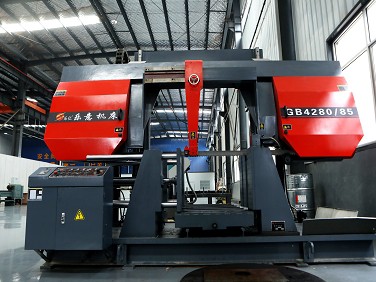
Advanced Equipment
KOBO is well equipped with Hi-tech equipments. We are fully equipped to supply a full range of refractory and reactive metals (titanium, niobium, tantalum, vanadium, molybdenum, tungsten, hafnium, zirconium,nickel etc) and their alloys, with unparalleled product support and customer service.
Competitive Pricing
Years of industry insight and global supply chain knowledge, ensure you receive premium quality materials, at competitive market rates. We offer competitive pricing without compromising on quality, making our products accessible to a wide range of customers.
Sustainability
We are committed to environmental sustainability and strive to minimize our environmental impact by using eco-friendly production methods.
-
![Nickel Bar and Wire]()
-
![Nickel Sheet]() Nickel SheetMaterial:Pure Nickel, Nickel Alloysread more
Nickel SheetMaterial:Pure Nickel, Nickel Alloysread more
Appearance:Silvery metal
Standard:ASTM F2063
Sizes:Customized
Density:6.45 g/cm3 -
![Nickel Powder]() Nickel PowderMaterial:Pure Nickel, Ni Alloysread more
Nickel PowderMaterial:Pure Nickel, Ni Alloysread more
Appearance:Dark Gray Powder
Morphology:Spherical
Particle Size:Customized


Definition of Nickel
Nickel is a silvery-white lustrous metal with a slight golden tinge. The hard and ductile transition metal has an atomic number of 28 and the symbol Ni on the periodic table. Only small amounts of pure native nickel is found in Earth's crust, typically in ultramafic rocks, and in the interiors of larger nickel–iron meteorites not exposed to oxygen outside Earth's atmosphere. In wide use, nickel is applicable to alloying, imparting beneficial properties to the resultant materials which, in some cases, are still referred to as nickel.
Benefits of Nickel
Corrosion resistance
One of the biggest advantages of nickel-alloy pipes is that they are incredibly resistant to several different types of corrosion. This includes oxidising media, which is commonly present in many industrial environments. Nickel is slow to oxidise at room temperature and hence it is considered to be naturally corrosion resistant. High-performance nickel alloys are also resistant to reducing media, aggressive chemicals and seawater. Corrosion-resistance properties vary depending on the grade chosen for your pipes. For example, the popular inconel alloy 625 has superior resistance to severely corrosive environments and is widely used in chemical processing as a result.
Heat resistance
Industrial environments tend to be incredibly hot. Materials need to be able to withstand these extreme conditions, without warping, corroding or losing strength. This is especially true in industries like rocketry, automotive and aerospace, where the right materials are paramount to the safety of the end product. Nickel alloys, especially those with a high amount of chromium, are particularly good at withstanding high temperatures. Nickel-copper alloys, such as monel alloy 400, are also incredibly resistance to heat extremes. This material is often used in heat exchanger piping and process vessels.
Mechanical properties
Nickel alloys have certain mechanical properties that make them useful in industrial operations. For example, they exhibit a low rate of thermal expansion. Expansion of a material can occur when exposed to high temperatures and this can affect the area, volume or shape of the material. This change in a material's structure is undesirable in industrial applications where it's imperative to retain the original size and shape. Nickel alloys can incorporate certain elements to help retain a low level of expansion, for example cobalt.

What Is Nickel Used For?
● Used to plate other metals to protect them. However, it is mainly used in making alloys such as stainless steel.
● Nichrome, an alloy of nickel and chromium with small amounts of silicon, manganese and iron, remains resistant to corrosion at extremely high temperatures, so is used in toasters and electric ovens.
● A copper-nickel alloy is commonly used in desalination plants, which convert seawater into fresh water.
● Nickel steel is used for armour plating.
● Other alloys of nickel are used in boat propeller shafts and turbine blades.
● Used in batteries such as rechargeable nickel-cadmium batteries and nickel-metal hydride batteries used in hybrid vehicles.
● Used in coins. The US five-cent piece (known as a ‘nickel’) is 25% nickel and 75% copper.
● Used as a catalyst for hydrogenating vegetable oils.
● Adding nickel to glass creates a green colour.
How is Nickel Made?
Nickel is produced through a combination of mining, smelting, and refining processes, as it rarely occurs in the pure metallic state. It is generally found as a mineral salt.
Nickel ores, typically containing nickel, copper, and other minerals, are mined. The ore is processed to extract nickel salts through crushing, grinding, and density sorting. The resultant nickel-salts concentrate is smelted in a reducing environment, to remove impurities and convert them into nickel matte. Refining is achieved through electrolysis or solvent extraction to purify the nickel from the unrefined and potentially complex alloy as-mined. The refined nickel is then generally added to a secondary smelting operation as an alloying agent.
It is often in a carbon arc or induction furnace heated crucible, under a vacuum or inert atmosphere to enhance purity.
What Is Unique About Nickel?
Nickel can be fabricated readily by the use of standard hot and cold working methods. Nickel reacts only slowly with fluorine, eventually developing a protective coating of the fluoride, and therefore is used as the pure metal or in the form of alloys such as Monel in equipment for handling fluorine gas and corrosive fluorides. Nickel is ferromagnetic at ordinary temperatures, although not as strongly as iron, and is less electropositive than iron but dissolves readily in dilute mineral acids.
Natural nickel consists of five stable isotopes: nickel-58 (68.27 percent), nickel-60 (26.10 percent), nickel-61 (1.13 percent), nickel-62 (3.59 percent), and nickel-64 (0.91 percent). It has a face-centred cubic crystal structure. Nickel is ferromagnetic up to 358 °C, or 676 °F (its Curie point). The metal is uniquely resistant to the action of alkalies and is frequently used for containers for concentrated solutions of sodium hydroxide. Nickel reacts slowly with strong acids under ordinary conditions to liberate hydrogen and form Ni2+ ions.

What Are the Different Types of Nickel?
In addition to nickel ores and pure nickel, the metal exists in a wide spectrum of alloys and is commonly used as nickel plating. Listed below are the main types of nickel:
Magmatic sulfide
Magmatic sulfide describes valuable mineral deposits formed within mafic and ultramafic igneous rocks through magmatic processes. These deposits contain minerals particularly rich in the metals nickel, copper, and platinum.
Whenever magma cools and crystallizes, sulfide minerals of higher density tend to sink and segregate. This produces elevated concentrations of higher-density metal salts. These deposits are often found in igneous geological complexes, particularly in layered intrusions or volcanic conduits. Magmatic sulfides are vital in global metal supply, as pre-concentrated deposits that render high value in mining and refining.
Laterites
Laterites are weathered soils and rock formations. They are generally characterized by a distinctive red or brown color and high levels of iron and aluminum oxides. Laterites are formed in tropical and subtropical regions with heavy rainfall and higher environmental temperatures. They develop as a result of intense chemical weathering over extended periods. This process leaches minerals from the upper layers and concentrates metallic salts in the lower layers because of their generally higher densities. Laterites are commercially valued for extraction as they can also contain concentrations of high-value minerals like nickel and cobalt.
Is Nickel Rare Metal?
Luckily for nickel aficionados, this metal is in abundant supply across – and within – the globe. The earth's core is thought to be made mostly of nickel and iron, and nickel occurs extensively within the earth's crust. In fact, it is the fifth most common element on earth. Nickel is also found in meteorites – a large nickel deposit in Canada is thought be from a giant meteorite that crashed to earth thousands of years ago.
Nickel is currently mined in more than 25 countries worldwide. Nickel is commonly found in two types of ore: laterite and sulfide. With land resources of around 300 million metric tons, 60 per cent correspond to laterite deposits (predominantly South-East Asia) and 40 per cent to sulfide deposits (South Africa, Canada and Russia). Australia is the only country to boast significant quantities of both of these deposits. Nickel reserves are estimated to be 94 million metric tons, located mainly in Indonesia (22.4 per cent), Australia (21.3 per cent), Brazil (17 per cent), Russia (7.3 per cent), Cuba (5.9 per cent) and the Philippines (5.1 per cent).
What Are the Physical Properties of Nickel?
Properties of nickel alloys diverge greatly depending on a wide range of other constituents and proportions.
|
Property |
Description |
Value at 25 °C (where relevant) |
|
Density |
Mass per unit volume |
8.83–8.95 g/cm-^3 |
|
Melting Point |
1,453 °C |
|
|
Tensile Strength |
Resistance to tensile load |
345–1,000 MPa |
|
Young's Modulus |
Elasticity in wire |
190–220 GPa |
|
Bulk Modulus |
Elasticity in bulk |
162–200 GPa |
|
Hardness |
Depending on the annealed state |
800–3,000 MPa |
Chemical Properties of Nickel
|
Property |
Description |
Chemical characteristic |
Application |
|
Oxidation rate (non-aggressive environments) |
Reactivity with free radicals from ionic sources |
Very low |
Adds oxidation resistance to alloys |
|
Reactivity |
Reaction rate with acids |
Very low until heated, then moderate |
Adds chemical resilience to alloys |
|
Latent heat |
Energy absorbed by crystallization |
High |
Resists melting, elevates melting point of alloys |
|
Crystalline structure |
Face-centered cubic crystals |
- |
Imparts or maintains ductility in alloys |
Does Nickel Rust or Corrode?
Nickel doesn't rust as it doesn't contain iron. Pure nickel is very corrosion resistant, especially to a variety of reducing chemicals. Alloying it with chromium gives resistance to oxidation. This leads to a broad variety of alloys, with optimal corrosion resistance in both reducing and oxidising environments.
Alloys based on nickel can tolerate more alloys than stainless steel and other iron-based materials while maintaining good stability. This flexibility has led to the development of a variety of nickel-based alloys with many alloys, designed to be resistant to a host of different corrosive environments.
Many of these elements can alloy with nickel in different combinations, so a very broad range of corrosion-resistant alloys is available to suit a wide variety of environments. Fabricating these alloys is easy due to their metallurgical stability and they can be thermally processed without the risk of harmful consequences. Strengthening high nickel alloys is possible by hardening processes: precipitation hardening, dispersion strengthened powder metallurgy and carbide precipitations.
10 Nickel Element Facts
Nickel (Ni) is element number 28 on the periodic table, with an atomic mass of 58.69. This metal is found in everyday life in stainless steel, magnets, coins, and batteries. Here's a collection of interesting facts about this important transition element:
Nickel is found in metallic meteorites, so it was used by ancient man. Artifacts dating as early as 5000 BC made from nickel-containing meteoritic metal have been found in Egyptian graves. However, nickel wasn't recognized as a new element until Swedish mineralogist Axel Fredrik Cronstedt identified it in 1751 from a new mineral he received from a cobalt mine. He named it an abbreviated version of the word Kupfernickel. Kupfernickel was the name of the mineral, which roughly translates as meaning "goblin's copper" because copper miners said the ore acted as though it contained imps that prevented them from extracting copper. As it turned out, the reddish ore was nickel arsenide (NiAs), so it's unsurprising copper was not extracted from it.
Nickel is a hard, malleable, ductile metal. It is a shiny silver metal with a slight gold tinge that takes a high polish and resists corrosion. The element does oxidize, but the oxide layer prevents further activity via passivation It is a fair conductor of electricity and heat. It has a high melting point (1453 ºC), readily forms alloys, may be deposited via electroplating, and is a useful catalyst. Its compounds are mainly green or blue. There are five isotopes in natural nickel, with another 23 isotopes with known half-lives.
Nickel is one of three elements that are ferromagnetic at room temperature. The other two elements, iron and cobalt, are located near nickel on the periodic table. Nickel is less magnetic than iron or cobalt. Before rare earth magnets were known, Alnico magnets made from a nickel alloy were the strongest permanent magnets. Alnico magnets are unusual because they maintain magnetism even when they are heated red-hot.
Nickel is the principal metal in Mu-metal, which has the unusual property of shielding magnetic fields. Mu-metal consists of approximately 80% nickel and 20% iron, with traces of molybdenum.
The nickel alloy Nitinol exhibits shape memory. When this 1:1 nickel-titanium alloy is heated, bent into shape, and cooled it can be manipulated and will return to its shape.
Nickel can be made in a supernova. Nickel observed in supernova 2007bi was the radioisotope nickel-56, which decayed into cobalt-56, which in turn decayed into iron-56.
Nickel is the 5th most abundant element in the Earth, but only the 22nd most abundant element in the crust (84 parts per million by weight). Scientists believe nickel is the second most abundant element in the earth's core, after iron. This would make nickel 100 times more concentrated below the Earth's crust than within it. The world's largest nickel deposit is in Sudbury Basin, Ontario, Canada, which covers an area 37 miles long and 17 miles wide. Some experts believe the deposit was created by a meteorite strike. While nickel does occur free in nature, it is primarily found in the ores pentlandite, pyrrhotite, garnierite, millerite, and niccolite.
While humans don't use nickel for any known biochemical reactions, it's essential for plants and occurs naturally in fruits, vegetables, and nuts.
Most nickel is used to make corrosion-resistant alloys, including stainless steel (65%) and heat-resistant steel and non-ferrous alloys (20%). About 9% of nickel is used for plating. The other 6% is used for batteries, electronics, and coins. The element lends a greenish tint to glass. It is used as a catalyst to hydrogenate vegetable oil.
The US five-cent coin called a nickel is actually more copper than nickel. The modern US nickel is 75% copper and only 25% nickel. The Canadian nickel is made primarily of steel.
Our Factory
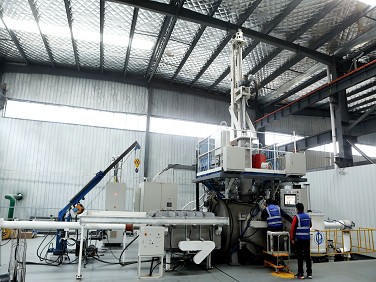
KOBO is well equipped with Hi-tech equipments, among them one is VAR(Vacuum Arc Remelt) melting furnace, a standard in industry, can allow multiple melting, it is economical to produce titanium which is for Industrial, Medical, Racing and Aerospace applications.
Another is EB( Electron Beam) melting furnace,Electron beam melting is distinguished by its superior refining capacity. Thus it is ideal for remelting and refining of metals and alloys under high vacuum in water cooled, ceramic free copper molds. It also plays an important role in manufacturing of high-pure sputtering target materials and alloys for the electronic industry.
We are fully equipped to supply a full range of refractory and reactive metals (titanium, niobium, tantalum, vanadium, molybdenum, tungsten, hafnium, zirconium,nickel etc) and their alloys. Our goal is to be a global metal resource solver.
Advanced Equipment


Our Certificate


Ultimate FAQ Guide to Nickel
As one of the leading nickel suppliers in China, we warmly welcome you to buy high-grade nickel in stock here from our factory. All our products are with high quality and low price. Contact us for quotation.
Titanium Tube, Titanium Pipes, Zirconium Fasteners