


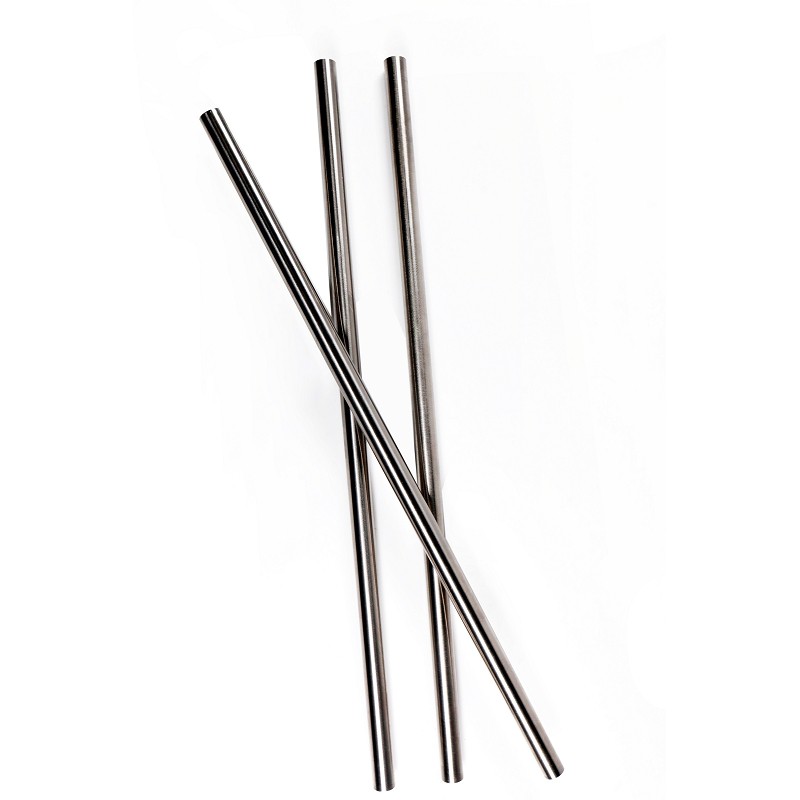
Material:Pure Hafnium, Hf Alloys
Appearance:Silvery metal
Standard:ASTM B776
Sizes:Diameter customized
Density:13.3 g/cm3
Hafnium
Why Choose Us?
Rich Experience
KOBO is a professional Metal processing company with more than 20 years of experience. Dedicated to strict quality control and attentive customer service, our experienced staff is always available to discuss your requirements and ensure complete customer satisfaction.
Advanced Equipment
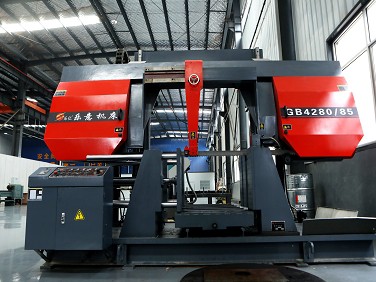
KOBO is well equipped with Hi-tech equipments. We are fully equipped to supply a full range of refractory and reactive metals (titanium, niobium, tantalum, vanadium, molybdenum, tungsten, hafnium, zirconium,nickel etc) and their alloys, with unparalleled product support and customer service.
Competitive Pricing
Years of industry insight and global supply chain knowledge, ensure you receive premium quality materials, at competitive market rates. We offer competitive pricing without compromising on quality, making our products accessible to a wide range of customers.
Sustainability
We are committed to environmental sustainability and strive to minimize our environmental impact by using eco-friendly production methods.
-
![Hafnium Bar and Wire]()
-
![Hafnium Sheet]() Hafnium SheetMaterial:Pure Hafnium, Hf Alloysread more
Hafnium SheetMaterial:Pure Hafnium, Hf Alloysread more
Appearance:Silvery metal
Standard:ASTM B776
Sizes:Diameter customized
Density:13.3 g/cm3 -
![Hafnium Powder]() Hafnium PowderMaterial:Hafnium Powderread more
Hafnium PowderMaterial:Hafnium Powderread more
Appearance:Dark Gray Powder
Standard:ASTM B776
Sizes:Diameter customized
Purity:> 99%


Definition of Hafnium
Hafnium is a tetravalent transition metal with atomic number 72 and represented with the symbol Hf in the Periodic Table. Hf was named after the city in which it was discovered, Copenhagen whose Latin name is Hafnia. A lustrous, silvery gray, tetravalent transition metal, hafnium chemically resembles zirconium and is found in many zirconium minerals. Hafnium is used in filaments and electrodes. Some semiconductor fabrication processes use its oxide for integrated circuits at 45 nanometers and smaller feature lengths. Some superalloys used for special applications contain hafnium in combination with niobium, titanium, or tungsten. Hafnium's large neutron capture cross section makes it a good material for neutron absorption in control rods in nuclear power plants, but at the same time requires that it be removed from the neutron-transparent corrosion-resistant zirconium alloys used in nuclear reactors.

Benefits of Hafnium
Hafnium wires boast excellent resistance to oxidation, great thermal and electrical conductivity, and low electron emission energy. These qualities make them ideal candidates for plasma emitter electrodes, surpassing other materials like copper. Hafnium, in particular, outperforms Zirconium, offering superior cutting abilities and a longer lifespan.
Hafnium is used in control rods in nuclear reactors, as an alloying agent in superalloys and as a getter for vacuum tubes. Some semiconductor fabrication processes use its oxide for integrated circuits at 45 nm and smaller feature lengths. Some superalloys used for special applications contain hafnium in combination with niobium, titanium, or tungsten.
Applications of Hafnium
● Hafnium has a unique property of capturing neutrons. Hence it is used in the control rods of reactors as well as nuclear submarines
● Its compounds are used in the ceramic and alloy industries as they have higher melting points.
● It is widely utilized in the microprocessors as they are involved in the reduction of leakage current.
● It is also used in incandescent and gas-filled lamps.
● This metal serves as an electrode in the process of plasma cutting as it gives out electrons
Physical Properties of Hafnium
● Hafnium is a shiny and silvery metal exhibiting ductile features.
● It is usually resistant to corrosion and exhibits similar chemical properties to that of zirconium. This similarity is because of the presence of valence electrons which are same and that of the same group.
● The impurities present in the zirconium highly affects the hafnium metal. Hence both of them are considered to be the most inseparable.
● When reacted with water, a thin film of a protective layer is formed on the metal which shows the occurrence of corrosion.
● There is no effect of acids on the metal, but still, when ignited in the presence of oxygen, the metal produces oxides. This metal is highly resistant to some of the concentrated alkalis.
● Around 5.8 ppm of the upper layer of the earth's crust constitutes this metal. This element does not exist freely in the environment.
Chemical Properties of Hafnium
Hafnium reacts in the air to form a protective film that inhibits further corrosion. Acids do not readily attack this element, but it can be burnt in the air or oxidized with halogens. Similar to its sister metal, zirconium, finely divided hafnium can combust spontaneously in the air, and is therefore very resistant to concentrated alkali.
The chemistry of zirconium and hafnium is similar, where the two cannot be separated based on different chemical reactions.
The solubility in solvents and the melting and boiling points of the compounds are the primary differences in these twin elements' chemistry.
4 Uses of Hafnium
Hafnium is a lustrous silver-gray transition metal, with a density of 13.31g / cm³. Hafnium has the properties of high-temperature resistance, corrosion resistance, oxidation resistance, easy processing, rapid heat absorption, and heat release, and is widely used in industrial production and our daily life.
Uses of hafnium in the field of electronic materials
Since hafnium emits electrons easily, it can be used as a cathode for X-Ray tubes. In addition, alloys of hafnium and tungsten or molybdenum are also used as electrodes for high-voltage discharge tubes.
Uses of hafnium in the field of chemistry
Hafnium can be used as a getter for many inflation systems. The hafnium getter can remove unnecessary gases such as oxygen and nitrogen present in the system. In addition, hafnium has strong anti-volatility and is often used as an additive for hydraulic oil to prevent the volatilization of hydraulic oil during high-risk operations.
Uses of hafnium in the atomic energy industry
Hafnium metal has excellent welding performance, processing performance, high-temperature resistance, and corrosion resistance, so it has become an important material in the atomic energy industry. Hafnium has a large thermal neutron capture cross-section and is an ideal neutron absorber. It can be used as a control rod and protection device for atomic reactors.
Uses of hafnium in the field of alloy materials
Hafnium has the characteristics of ductility, oxidation resistance, and high-temperature resistance. Therefore, hafnium is also a good alloy material and is used in many alloys. For example, a hafnium-niobium alloy containing 10% hafnium can be used as a rocket nozzle, while a tantalum-tungsten alloy containing 2% hafnium has high creep strength and can be used as a protective material for a spacecraft.
In addition, hafnium can also be used in tungsten wire manufacturing. Adding element hafnium to tungsten, molybdenum, and tantalum alloys can produce carbide alloys and heat-resistant alloys. For example, hafnium and carbon compound hafnium carbide (HFC) can be used as cemented carbide additives due to their high hardness and melting point. 4TaCHfC has a melting point of about 4215ºC, which is the compound with the highest melting point among known materials.
What Are Some Interesting Facts About Hafnium?
Fresh, pure hafnium is a metal with a bright, silvery luster. However, hafnium oxidizes to form a beautiful rainbow-colored surface effect.
Hafnium is not found free in nature. Instead, it forms compounds and alloys. Because the two metals share similar occurrence and properties, hafnium is extremely difficult to separate from zirconium. Most hafnium metal has some degree of zirconium contamination. Although hafnium is found with ores (mainly zircon and baddeleyite), it is not as reactive as most transition metals.
When hafnium is powdered, the increased surface area improves its reactivity. Powdered hafnium readily ignites and may explode.
Hafnium finds use as an alloying agent for iron, titanium, niobium, and tantalum. It is found in integrated circuits, vacuum tubes, and incandescent lamps. Hafnium is used in nuclear reactors, mainly as nuclear control rods because hafnium is an exceptionally powerful neutron absorber. This is one significant difference between hafnium and its sister element zirconium -- zirconium is essentially transparent to neutrons.
Hafnium in its pure form is not particularly toxic, but it does represent a health hazard, particularly if inhaled. Hafnium compounds should be handled with care, as should any transition metal compound because the ionic forms can be dangerous. Only limited testing has been done on the effect of hafnium compounds in animals. All that is really known is that hafnium usually exhibits a valence of 4.
Hafnium is found in the gemstones zircon and garnet. Hafnium in garnet may be used as a geochronometer, which means it can be used to date metamorphic geological events.
What State of Matter Is Hafnium Commonly Found In?
|
Classification: |
Hafnium is a transition metal |
|
State: |
Solid |
|
Melting point: |
2230 oC, 2503 K |
|
Boiling point: |
4600 oC, 4873 K |
|
Electrons: |
72 |
Is Hafnium Stable or Unstable?
Natural hafnium (72Hf) consists of five observationally stable isotopes (176Hf, 177Hf, 178Hf, 179Hf, and 180Hf) and one very long-lived radioisotope, 174Hf, with a half-life of 7.0×10¹⁶ years.
In addition, there are 34 known synthetic radioisotopes, the most stable of which is 182Hf with a half-life of 8.9×10⁶ years. This extinct radionuclide is used in hafnium–tungsten dating to study the chronology of planetary differentiation.
No other radioisotope has a half-life over 1.87 years. Most isotopes have half-lives under 1 minute. There are also at least 27 nuclear isomers, the most stable of which is 178m2Hf with a half-life of 31 years. All isotopes of hafnium are either radioactive or observationally stable, meaning that they are predicted to be radioactive but no actual decay has been observed.
Is Hafnium Used in Rockets?
In high-temperature alloys and polycrystalline nickel-based superalloys, hafnium's high melting point - 2,233°C (4,051°F) - helps strengthen grain boundaries, thus considerably improving both high-temperature creep and tensile strength. In addition, with its high affinity for carbon, nitrogen and oxygen, the metal also provides strengthening through second-phase particle dispersion.
One of the most common uses of hafnium is as one of the alloys in the superalloy group used in the turbine blades and vanes found in the "hot end" of jet engines, i.e., in environments with very high temperatures and pressure and high stress. Such superalloys can contain 1-2 percent hafnium.
Hafnium can also to be found in a number of other alloys, such as tantalum-based T111 (Ta-8%W-2%Hf); tantalum/tungsten-based T222 (Ta-10%W-2.5%Hf-0.01%C) and molybdenum-based MHC, or molybdenum-hafnium-carbide, which breaks into 1.2%Hf-0.1%C (the rest moly). In addition, it can be found in a number of niobium-based alloys: C-103 (10% Hf-1%Ti-1%Zr); C-129Y (10%W-10%Hf-0.7%Y) and WC-3015 (30%Hf-15%W-1.5%Zr).
Among other applications, niobium-based alloys containing hafnium have been used as coatings for cutting tools, while C-103 and hafnium-tantalum-carbide have been used in the fabrication of rocket engine thruster nozzles.
In both alloys containing tantalum and molybdenum, as well as in binary compounds, hafnium is also an excellent refractory material. With a melting point of over 3,890°C, hafnium carbide (HfC) makes one of the most refractory binary materials around. And with a melting point of some 3,310°C, hafnium nitride is the most refractory of all known metal nitrides.
Hafnium is used for nuclear reactor control rods because of its ability to absorb neutrons and its good mechanical and corrosion resistance qualities. It is also used in gas filled and incandescent lights. Hafnium alloys with several other metals, such as iron, niobium, tantalum and titanium. Hafnium-niobium alloys, for example, are heat resistant and are used in aerospace applications, such as space rocket engines.
Our Factory
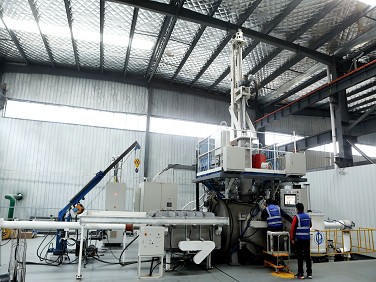
KOBO is well equipped with Hi-tech equipments, among them one is VAR(Vacuum Arc Remelt) melting furnace, a standard in industry, can allow multiple melting, it is economical to produce titanium which is for Industrial, Medical, Racing and Aerospace applications.
Another is EB( Electron Beam) melting furnace,Electron beam melting is distinguished by its superior refining capacity. Thus it is ideal for remelting and refining of metals and alloys under high vacuum in water cooled, ceramic free copper molds. It also plays an important role in manufacturing of high-pure sputtering target materials and alloys for the electronic industry.
We are fully equipped to supply a full range of refractory and reactive metals (titanium, niobium, tantalum, vanadium, molybdenum, tungsten, hafnium, zirconium,nickel etc) and their alloys. Our goal is to be a global metal resource solver.
Advanced Equipment


Our Certificate


Ultimate FAQ Guide to Hafnium
As one of the leading hafnium suppliers in China, we warmly welcome you to buy high-grade hafnium in stock here from our factory. All our products are with high quality and low price. Contact us for quotation.
Vanadium Fasteners, Hafnium Sheet, Industrial Hafnium Sheets