

In recent years, the field of data storage has witnessed exponential growth, driven by the ever - increasing demand for digital information management. As data generation continues to soar, the need for high - performance, reliable, and efficient data storage solutions has become paramount. Among the various materials contributing to this technological advancement, tantalum has emerged as a crucial element with a wide range of applications. As a tantalum supplier, I am excited to explore these applications and share insights into how tantalum is shaping the future of data storage.
1. Tantalum in Capacitors for Data Storage Systems
Capacitors are fundamental components in data storage devices, playing a vital role in power management and signal processing. Tantalum capacitors, in particular, are highly prized for their unique electrical properties.
Tantalum is used to make the anode of these capacitors. Its high dielectric constant allows tantalum capacitors to store a large amount of electrical charge in a relatively small volume. This property is especially important in modern data storage systems, where miniaturization is a key trend. For example, in solid - state drives (SSDs), which are becoming the standard for high - speed data storage, space is at a premium. Tantalum capacitors can be designed to be very compact, fitting into the tight spaces within SSDs while still providing the necessary power stability.
Moreover, tantalum capacitors offer excellent reliability and long - term stability. They have a low equivalent series resistance (ESR), which means less energy is wasted as heat during operation. In data centers, where large numbers of storage devices are running continuously, minimizing energy loss is crucial for reducing operational costs and environmental impact. The reliability of tantalum capacitors also helps to prevent data loss due to power fluctuations, ensuring the integrity of stored information. You can find high - quality tantalum materials for capacitor production in our Tantalum Bar and Wire products, which can be further processed to meet the specific requirements of capacitor manufacturers.
2. Tantalum in Magnetic Storage Media
Although magnetic storage technologies such as hard disk drives (HDDs) have faced competition from SSDs, they still play a significant role in large - scale data storage due to their high capacity and relatively low cost per gigabyte. Tantalum is used in the manufacturing of magnetic storage media in several ways.
In thin - film magnetic recording heads, tantalum is used as a protective layer. These heads are responsible for reading and writing data on the magnetic disks. The protective tantalum layer helps to prevent wear and corrosion of the delicate magnetic components. It provides a hard, durable surface that can withstand the high - speed movement and repeated contact with the disk surface. This is essential for maintaining the accuracy and longevity of the data - reading and - writing process.
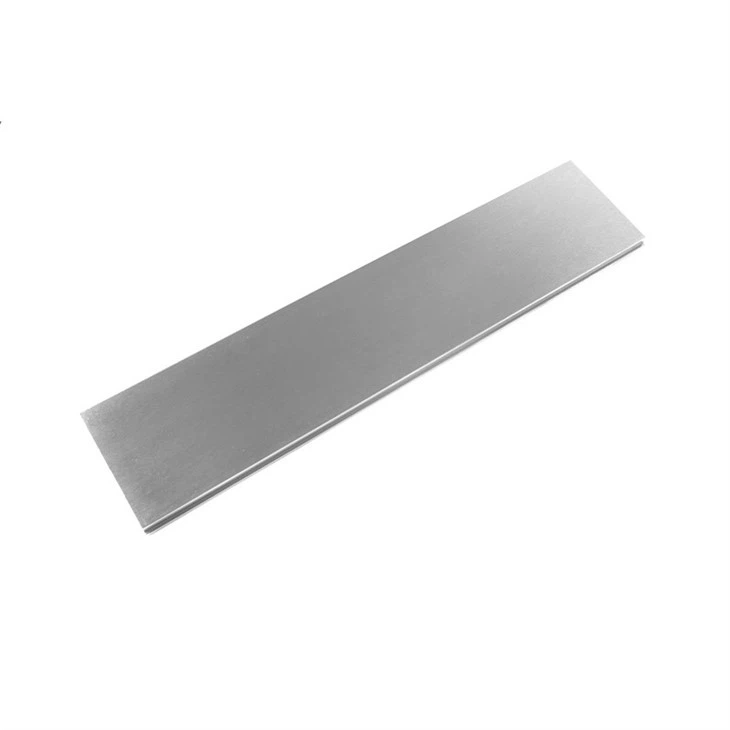

Tantalum can also be incorporated into the magnetic alloy materials used in the disks themselves. By adding tantalum to the alloy, the magnetic properties of the disk can be optimized. It can improve the coercivity, which is the ability of the magnetic material to resist demagnetization. This allows for higher - density data storage, as smaller magnetic domains can be used to represent data bits without the risk of accidental erasure. Our Tantalum Sheet products can be processed into the appropriate forms for use in magnetic storage media manufacturing, providing the necessary tantalum content for these applications.
3. Tantalum in Semiconductor Components for Data Storage
Semiconductors are at the heart of modern data storage devices, from memory chips to controllers. Tantalum has found its way into semiconductor manufacturing processes due to its excellent electrical conductivity and chemical stability.
In the production of semiconductor interconnects, tantalum is used as a diffusion barrier. As semiconductor devices become smaller and more complex, the risk of metal diffusion between different layers of the device increases. Tantalum can act as a barrier to prevent the diffusion of copper or other metals, which could otherwise cause short - circuits and degrade the performance of the device. This is crucial for maintaining the reliability and functionality of memory chips, such as dynamic random - access memory (DRAM) and static random - access memory (SRAM), which are essential for fast data access in data storage systems.
Tantalum is also used in the fabrication of gate electrodes in some semiconductor transistors. The unique electronic properties of tantalum can help to improve the switching speed and power efficiency of these transistors. Faster - switching transistors mean quicker data processing and access times in data storage devices, enhancing the overall performance of the system. Our Tantalum Machining Parts can be precisely manufactured to meet the strict requirements of semiconductor component production, ensuring high - quality tantalum use in these critical applications.
4. Tantalum in Data Center Infrastructure
Beyond the individual data storage devices, tantalum also plays a role in the overall infrastructure of data centers. Data centers are large - scale facilities that house thousands of servers and storage systems, and they require a stable and efficient power distribution network.
Tantalum capacitors are used in power supplies and voltage regulators within data centers. They help to smooth out the power supply, reducing voltage fluctuations and noise. This is essential for the proper operation of the sensitive electronic equipment in data centers. Additionally, tantalum's resistance to corrosion makes it suitable for use in electrical connectors and wiring within the data center infrastructure. Corrosion - resistant connectors ensure reliable electrical connections, minimizing the risk of data transfer errors and equipment failures.
5. Future Outlook
As the demand for data storage continues to grow, the role of tantalum in this field is likely to expand. With the development of emerging technologies such as artificial intelligence, the Internet of Things (IoT), and 5G, the amount of data generated and stored will increase exponentially. This will require even more advanced data storage solutions, and tantalum's unique properties will be in high demand.
For example, in the development of next - generation memory technologies, such as resistive random - access memory (RRAM) and phase - change memory (PCM), tantalum may play a crucial role. These new memory technologies offer faster access times, higher density, and lower power consumption compared to traditional memory technologies. Tantalum's electrical and chemical properties could be exploited to optimize the performance of these emerging memory devices.
Conclusion
In conclusion, tantalum is a versatile and essential material in the field of data storage. From capacitors and magnetic storage media to semiconductor components and data center infrastructure, tantalum's unique properties contribute to the performance, reliability, and efficiency of data storage systems. As a tantalum supplier, we are committed to providing high - quality tantalum products, including Tantalum Bar and Wire, Tantalum Sheet, and Tantalum Machining Parts, to support the continuous development of the data storage industry.
If you are involved in the data storage field and are looking for reliable tantalum materials, we invite you to contact us for procurement and further discussions. We are ready to work with you to meet your specific requirements and contribute to the advancement of your data storage solutions.
References
- "Handbook of Tantalum and Niobium" by various authors.
- Research papers on data storage technologies from IEEE Xplore and ACM Digital Library.
- Industry reports on the data storage market and materials trends.